Thursday, July 28, 2016

Our 2016 Summer in Indiana; Our Work Assignment and our Indiana Experiences

May 2016
So far, the month of May, in southern Indiana, has been an immense experience, with Terry’s family, in the Ohio River Valley. We’ve had some terrific family get-togethers in Madison, Seymour, Columbus, Indianapolis and the southern Indiana area. Regardless of lots of rain, we have been impervious to the weather and have filled our time with loads of exciting adventures.

After lots of time in the western states, visiting historical sites, and reading historical accounts, we were reminded that the Ohio River Valley was once the “western frontier”, called the Old Northwest Territory. The past month has been an extraordinary assessment of some familiar and some new historical interpretations. I enjoyed a recent documentary on the frontier days of Kentucky, focusing mainly on the explorations of Daniel Boone and friends. This led me to read accounts of others like Simon Kenton, James Harrod, George Rogers Clark, and other frontiersmen.

Another surprising experience was a weekend with Glen and Kim in Indianapolis. We took our RV rigs to the Indiana State Fairground and set-up a base-camp for the weekend. The Fairground Exhibition Center was hosting a classic-car auction and we just happened to be right in the middle of the event. We have NEVER seen so many classic cars and trucks going on the auction block. We learned this is another sub-culture of hobbyists, restorers, and collectors, coming together to share their passion for “road art” and classic vehicles.
Our weekend was very entertaining, exploring Indianapolis.

June 2016
Our two-month, (June and August) assignment at Monroe Lake, involves working about 20-hrs/week, at the campground Kiosk, checking campers in/out of the 227-site campground.
A unique weekend came about when we assisted the IDNR with the International Bowhunting Organization Tournament completion at Fairfax SRA. It was a huge and very successful event for the State of Indiana and the IDNR. 
Notes on Monroe Lake Staff;
IDNR Property Manager Jim
Mgr. Corey
Visitor Center Karen/Rex
Activity Center Sara(IU Senior)/Jill(Naturalist)Hannah(Naturalist)
Main Gate Gary/David
CG Gate Donna/Michael/Kenny/Lakota
Security Andrew/Danny

Our summer residence at Monroe Lake is surrounded by rural southern Indiana farmland, producing the usual corn, soybeans, hay, and cattle. The land consists of rolling hills with steep hollows, so the best farmland is in the creek and river bottoms. The forests are predominately hardwood consisting of beautiful stands of Oak, Poplar, Walnut, Hickory, Sycamore, Maple, Ash, Elm, Beech, Persimmon, Paw Paw (Indiana Banana), and Cottonwood, providing food and cover for abundant wildlife.
Commonly, the hills have outcroppings of layered limestone which is used in a variety of applications. Old and new limestone quarries dot the countryside and many have become dangerous swim-holes, claiming lives, from drownings. The Bedford limestone belt is a region of solid limestone, producing high quality building material, which has and is being used in residential, commercial, public buildings and commemorative monuments.
The summer days are very enjoyable and the park is busy with people appreciating the outdoors. The weather can be hot and humid, adding to the attraction of Monroe Lake, largest lake in Indiana.
Our town is Bloomington, Indiana, home of the Indiana University campus. It’s a very impressive campus with stately “Indiana limestone” buildings, beautiful landscaping and a legendary academic and sports “Hoosier” tradition. The campus also facilitates entertaining and educational programs for the enjoyment of the community.
I have been very engaged in studying the history of Indiana as part of the “early northwest territory”. The area is loaded with historical sites, prominent in the struggle for control of the territory by the French, British, Indian, and American frontiersmen and pioneers.
Our exploration-visits to these curious sites has been rewarding:
Bedford Limestone Plant and Quarry
Salem and Beck’s Mill
Fort Vilonia
Columbus
Nashville
Brownstown
Washington State Forest

July 2016
After completing our June assignment at Monroe Lake, we returned to Glen and Kim’s for the first two weeks of July, enjoying their company, shopping, and reconnoitering Seymour.
7-15-16
We moved to Madison City Campground, on the Ohio River, for two days, in order to attend and assist in Bill’s retirement party. It was an enormous success and the food, fellowship, and comradery were an exceptional circumstance of enjoyment. We met and talked with numerous campers on the river and enjoyed watching the river “go by”. Madison has taken advantage of their mile-long river frontage and created a gorgeous, shady, landscaped river-walk, from the campground to the West end of town. The bridge over to Kentucky has a lofty, exhilarating, and scenic walkway across the Ohio River, which is very popular with tourists and locals. I walked over early Sunday morning in a dense fog, and with very low visibility, found the experience quite stimulating, concentrating on my other senses.
7-17-16
Now, we’re heading off on an Indiana “Bicentennial tour”. We have selected a circuitous route which intersects the most important historic centers of the state.

First we visited (1808) Harrison County’s Corydon, Indiana’s first State Capital, situated between the White and Wabash Rivers. This old settlement is well preserved and the site of much early history of the Indiana Territory. Taking a walking-tour, we explored an astounding collection of buildings and sites from the pioneer days. My favorites were the William Henry Harrison cabin, the old Indiana Masonic Grand Lodge, the old State House, and the “Constitution Elm”. Using your imagination, one can almost envision the pioneer people going about their business in the old State Capital. I could just picture the Grand Lodge Masons, discussing the issues and plans, concerning their new state.  

Next, we visited Vincennes, in Knox County, the first Indiana Territorial Capital, with its George Rogers Clark Memorial and old Cathedral St. Frances Xavier, on the banks of the Wabash River. We had a good afternoon rain but we persevered in our touring activities. This 1732 town was settled by the French trappers and traders from Canada, taken by the British, and then taken by the Americans. It played a major role in the process of US claim to the old Northwest Territory, creating Indiana, Ohio, Michigan, Illinois, Wisconsin, and Minnesota.

Just north, we encountered the (1809) “Ten O’clock Treaty Line, marking the southern line of the three-million-acre land acquisition negotiated with the Indians, by William Henry Harrison.

We traveled across huge agricultural farms of the Wabash Valley, verdant green forests, and through small, rural communities, with their churches, quick-stop/video stores, and bars. We picnicked at a small country church, under the shade of some large Maple trees, and enjoyed a quiet, restful lunch. Resuming our drive to Terre Haut, we observed large work-crews picking and loading melons in the fields.
Suddenly, a wide weather system approached from the northwest and the headwind rocked our rig and the ever-present corn and bean fields showed the underside of their leaves. Focusing on my driving, I noticed the battery alert Icon light on my instrument panel. With no noticeable problematic difficulty, we made it to O’Reilly Auto Parts in Terre Haute, where we diagnosed and replaced the voltage regulator. Just as I reinstalled the repaired alternator, a heavy rain came and we waited it out in town. Traveling from Vincennes, it’s obvious where Terre Haute got its name, as the town is on high ground, beside the Wabash River. Terre Haute, in Vigo County, is at the intersection of two major roadways: U.S. 40 from California to Maryland and US 41 from Copper Harbor, Michigan to Miami, Florida, so one can choose extreme destinations from here.
We drove around Terre Haute and visited the Masonic Temple, the Vigo County Courthouse, and Indiana State University.

The Classical Revival, Masonic Temple is governed by a Board selected from the six area Masonic Lodges. The building floors are used by the various area Blue Lodges and the York Rite Council, Chapter, and Commandery of Knights Templar.

The present Courthouse replaced the first, old brick building with the 1884 laying of the ten-thousand pound, Indiana limestone, corner-stone, by the freemasons. The architecture, landscaping, art, and furnishings of the elegant building are very impressive and pleasing to the eye.

Indiana State University’s main entrance, Fairbanks Hall and Dede Plaza are the focal points of campus and the landscaping is very impressive. The “Sycamores” have a long-range growth-plan for the University and because of the downtown location, development is spreading, and segmenting the campus. For example, the new football stadium is far from the current campus. With two other small colleges, Terre Haute certainly exhibits a college town persona.

Traveling on up the Wabash, we arrived at Lafayette, in Tippecanoe County, home of Purdue University, and obviously named for French General Lafayette, a significant aide to General George Washington and the Continental Army. Historic old Lafayette is situated on the east bank of the Wabash and Purdue University on the west bank. We made a late afternoon, early evening excursion around town and the Purdue campus. It was a very warm day but sundown and a light breeze brought a comfortable evening.
Purdue is a huge campus with much to see. Of course, we walked around the athletic complex and took a picture of Pete, the “Boilermaker”. My favorites were: old University Hall, Purdue Memorial Union, the Horticulture gardens, Cary Quad and Spitzer Court, and Purdue Pete the “Boilermaker”.
The old town, along the river, is an interesting collection of bars, restaurants, and shops, with the Tippecanoe County Courthouse as a centerpiece. The Courthouse is a stunning pastiche of architectural styles, the epitome of “county capitals”. Tippecanoe County’s name is derived from a Miami Indian term relating to “place of the fish-people”. The Tippecanoe River flows from Fort Wayne to its confluence with the Wabash, just upstream from Lafayette.
The “Battle of Tippecanoe” resulted in Governor William Henry Harrison’s army destroying Tecumseh’s headquarters, leading to the eventual defeat of Indian and British resistance, in the War of 1812. This (Tippecanoe) nickname was the source of the “Tippecanoe and Tyler too” slogan in Harrison’s presidential election of 1840. Unfortunately, William Henry Harrison died after serving only 32 days in office, the shortest Presidential service in US history. 
I really enjoyed seeing these historic places that I have read so much about!

It’s no surprise that so many historic sites would be found along the Wabash River, because it was a popular transportation route long before Europeans came on the scene. The Wabash takes it rise in Ohio and flows in a horseshoe or half-circle arc, across Indiana, to its confluence with the Ohio. Wabash is derived from an Indian word meaning “white”, undoubtedly related to the numerous white “sand bars” along the river banks.
Leaving Lafayette, we continued following the Wabash and crossed it several times on the route to Elkhart. At Delphi, we crossed the (1853) Wabash and Erie Canal, which connected the Great Lakes to the Ohio River at Evansville. Just north, we encountered the old Wilson Bridge, one of many historic bridges in Carroll County.
On US 31 in Fulton County, we discovered another curious and fascinating example of Indiana pioneer architecture, the “round Barn”. Round barns worked well for their purposes and they were easier and cheaper to build.  
At the confluence of the Eel and Wabash, in Logansport, we crossed the Wabash and Eel, heading north to Elkhart.
Logansport was settled circa 1826 and named for a half-Shawnee soldier named James Renick-Logan, better known as “Captain Logan” who served as a scout for U.S. forces in the surrounding area during the War of 1812. The entire block along the river is on the National Register of Historic Places. We should have explored a few hours in Logansport, however the mid-day heat was too oppressive.

We made it to Elkhart and setup at a very accommodating Elkhart RV Park, just in time for a refreshing rain storm. We plan to visit Notre Dame, Nexus RV Plant, and the RV Museum. We also resolved our truck alternator problem, thanks to O’Reilly Auto Parts.

The Notre Dame campus is under construction in every quarter, so it distracted from the views. Regardless, the experience of exploring around the famous campus was sensational. In the evening, it being summer break, the campus was quiet and almost deserted, so we toured at our leisure.
My favorites were the Basilica, Main Building-Golden Dome, Washington Hall on the Main Quadrangle (God Quad), St. Joseph Lake, St. Mary Lake, and of course, the Notre Dame Stadium, home of the "Fighting Irish". The stadium is undergoing MAJOR renovations. The Memorial Library was very impressive too. What a great treat, to see this historic old University!

Our visit to the NEXUS RV, factory-direct manufacturer in Elkhart, was a fascinating tour of how quality, custom, make-to-order RVs are manufactured for individual customers. You menu-order your options, the factory builds it, and you pick it up at the factory and drive away, realizing considerable savings. It was a cool tour!

The Elkhart RV/MH Hall of Fame and Museum is all about the development of the Recreational Vehicle and Motor Home Industry from WW I to present. If you like RV’s, this is an incredible collection of camper and memorabilia dating back to the 1920’s. Very entertaining, informative, and nostalgic!

Sunday, July 24, 2016
Today, we broke camp at Elkhart and traveled to Indianapolis. Along the way, we traveled a portion of the Indiana Heritage Trail, a scenic, back-roads drive that provides glimpses, tastes, and handicrafts, of Amish life.
We crossed the headwaters of the Tippecanoe River, between Etna Green and Mentone.
Etna Green, a small town in Kosciusko County, is a quaint little town and home to a small Amish community.
Attwood, an old railroad town, was situated on the Pittsburg, Fort Wayne, and Chicago railway. They’re still waiting for another train to come in!
Mentone is the self-proclaimed "Egg Basket of the Midwest" because of prolific commercial egg production in the area, and holds an Egg Festival annually in early June, to celebrate its heritage. A large concrete egg stands near the town center and is considered locally to be the "Largest Egg in the World". Now that's a unique claim-to-fame!
At Akron, we had lunch and walked the old village for a stretch-of-the-legs.
Chili, pronounced Chil-lye by the Hoosiers, is located on the banks of the Eel River, and is a popular water-recreation spot. They have canoe rentals and a shuttle service. It was hot today and the river was busy with paddlers.
Via the Wabash and Ohio rivers, Eel River waters flow to the Mississippi River and ultimately the Gulf of Mexico. Before the United States consolidated its hold on the Northwest Territory, the Eel formed a rough boundary between the Potawatomi tribe on the north and the Miami tribe on the south. Additionally, it was an area of competition between French and British colonial forces for decades before the American Revolution. It was also the scene of some serious battles between the Americans and the Indians, who were allied with the British. It is a beautiful and historic waterway and we enjoyed encountering it again on our way south.

At Indianapolis, we setup a camp at the Indiana State Fairgrounds, and explored around Indianapolis. It was appropriate to end our Indiana “Bicentennial ramble” at the Indiana State Capital. We visited around the artsy, picturesque, charming and bohemian neighborhoods, along Fall Creek, where one can find an assortment of fashionable, al fresco-dining, restaurants, bars, shops, and attractions. On Monday, we took a guided tour with Circle City Tours and enjoyed an enlightening, informative and historical tour of the city. My favorites were extensive;


·         Allison Mansion
·         Governor’s Mansion
·         Stokley Mansion
·         Indy Mortor Speedway
·         Lucas Oil Stadium
·         Indiana War Memorial
·         Downtown Indy
·         Scottish Rite Cathedral
·         The Eiteljorg Museum
·         White River Park
·         Indianapolis Zoo
·         Monument Circle
·         Indiana Central Canal
·         Indiana Cultural Trail
·         White River Gardens
·         Indiana State Capital
·         Indian State Museum
·         Indiana Convention Center
·         Indiana Repertory Theater
·         Christ Church Cathedral
·         NCAA Headquarters and Museum
·         American Legion Mall
·         Veterans Memorial Plaza
·         Victory Field
·         9-11 Memorial
·         Medal of Honor Memorial
·         IU/PUI
·         Butler University


Our favorites-list obviously touts the advantage of using a worthy professional tour service, maximizing time and tourist efforts. We like the overview tour-approach, followed by detail exploration of our favorites, on our own.
The Lilly and Allison Estate Gardens, along with several other projects, were designed and created by Jens Jensen. The architecture and landscaping around the city are stunning examples of the planning, designing, and construction of beautiful showplaces. An exceptional Capital City!
Indianapolis is a fine Capital City and loads of fun for tourists. We could revisit this city repeatedly, and still be excited to see it.

Some observations from around Indiana:
Like the American Elm, regardless of protection efforts, the Indiana Ash trees are becoming a thing of the past, as a result of the Emerald Ash Borer. We see dying and dead Ash trees everywhere we go in Indiana.

We were amazed at the huge agricultural production in the Wabash Valley. We observed the Melon harvest in progress and had to have a Vincennes melon.

We are very familiar with Robbins but have never heard the summer-singing repertoire that they’re performing in Indiana. In early morning and late evening, the woods are a symphony of “Robbin music”!

The Pioneer Village at Vigo County’s, Fowler Park is the most representative collection of authentic Pioneer log-cabins, and out-buildings that we’ve ever seen. Perusing the Pioneer Village is like going back in time. The park did a terrific job in locating, procuring, and moving these authentic structures to the park. If you like Pioneer Architecture, this is a must-see!

7-26-16
Concluding our “Indiana Bicentennial” tour, we arrived back at Seymour, to spend a few days with Glen and Kim, before we return to Monroe Lake’s, Paynetown SRA, for our August camp-host assignment. We’ll be working the Kiosk, an assignment that we’re very familiar with. 

Monday, May 2, 2016

Across the Midwest and over to Indiana

Sunday, April 24, 2016
Our week at Tulsa with Terry’s family was a most enjoyable visit. We had rain for the first two days and then clear, beautiful spring days. Terry especially enjoyed the personal quality time with her mother.
We cooked, dined by the pool, watched television and movies, took nice walks, shopped, visited with the daughters, and Friday night, we fed and entertained the traveling Niehause family. It was an excellent week and everyone seemed to enjoy the camaraderie. Patrick and Kristy have a charming home and gardens in Tulsa.
We parked our RV at the garden gate and consequently, the rain-soaked ground caused us some concern about getting out. Fortunately, I found some good wheel support-boards and Patrick cut a small tree, providing us with an easy exit.
No greater love hath a man
Than to cut a tree
For his RV clan
After coffee, we departed Tulsa, and headed east on US 412. We crossed the McClellan-Kerr Arkansas River Navigation System, drove to Chouteau, and took the Cherokee Turnpike to the Arkansas line. Oklahoma has a network of expedient Turnpikes, crisscrossing the entire state. For convenience, you need to have the correct toll fees ready for the toll-booth.
The McClellan-Kerr Arkansas River Navigation System is 445-mile canal network which connects Tulsa to the Mississippi River. We heard boat horns at Catoosa and now we realize that the canal IS very close to Catoosa. This is another extraordinary US Army Corps of Engineers project.
We continued east to Arkansas’s Siloam Springs, Springdale, and a camp at the Withrow Springs State Park. Traveling along the highways east, from California to Arkansas, we experience a restrained culture-shock, observing lifestyles and conditions that still exist from the previous century. Education must be a factor but the local employment opportunities must also keep people in a deprived condition.

Springdale is Tyson Poultry country and it’s all about chicken. The totally-integrated operation begins with laying-hen growers who produce fertile eggs for the hatchery. The hatchery produces baby chicks for the broiler poultry growers. The feed mill produces feed for the broiler poultry growers and the fertile egg producers. The processing plant produces the various poultry products from the broiler growers AND the retired laying-hens become stewing hens. This autonomous business model is replicated across several southern states to supply the worldwide Tyson Poultry market. I like it fried, grilled, broiled, roasted, stewed, barbequed, and included in all sorts of delectable recipes.

Withrow Springs State Park, situated in the Ozark Mountains of Northwest Arkansas, and named for 1832 pioneer Richard Withrow, has a gushing spring which feeds the old grist mill and meanders over the bluffs into the War Eagle River. The mountains are predominately covered in hardwoods, especially White Oak, Red Oak, Hickory, Sycamore, Poplar, and occasional Cedar. An outstanding population of Dogwoods paint the mountain slopes from bottom to top, with waves of white blossoms. The park is sporting new-spring-green and the spreading layers of Dogwood blossoms accent the unspoiled Ozark beauty of the park. We enjoyed the park, walking around, cooking, eating, watching television, and resting at our gorgeous campsite.

Monday, April 25, 2016
Today, we continued across north Arkansas to Harrison, Flippin, and Bull Shoals, with a few significant Arkansas towns sandwiched between. The Ozark Mountain streams run clear and fast and offer some outstanding whitewater paddling opportunities. Over the years, we have experienced many exhilarating challenges and adventures, in our “Old Town” canoe, on the Ozark Rivers and creeks.

Huntsville is the site of the 1863 “Hunstville Massacre” and in 2006, they placed a monument at the site, commemorating the event. War is hell!

Marble is an old settlement, with the old marble quarry contributing some marble to the Washington Monument. Not a bad “claim to fame”! The old quarry property became “Dogpatch USA”.

Alpena (town) Pass is an old railroad pass in the Ozark Mountains between Carroll and Boone counties, Arkansas. This old town has a story or two to tell. Interesting spot!
 

At Osage, Arkansas, the old (1899) Stamps Store is a historic stone “general store” that’s loaded with Carroll County history. Named for the Osage tribe, many historic “firsts” occurred here.

It is believed that the first white men to visit the Harrison, Arkansas area were the Hernando de Soto explorers, who met with “cliff dwellers” along the White River bluffs around Bear Creek. Must have been an interesting encounter!

Entering Bull Shoals by crossing the Bull Shoals Dam, we took a picturesque campsite on the lake, just north of and overlooking the dam. This US Army Corps of Engineers project provides flood control, hydroelectric energy, and recreation on the White River. It’s a fine resort and retirement community and White River is ranked as one of the top trout fisheries in the country. Downstream from the dam, at the confluence of the White and Mississippi Rivers, is the beginning of the McClellan-Kerr Arkansas River Navigation System.                                                                                             

It’s a most beautiful Spring in the Tri-state area of Missouri, Illinois, and Kentucky. We crossed the Mississippi River at Cape Girardeau and cruised down the Illinois side, through "Little Egypt". We visited the confluence of the Ohio and Mississippi Rivers at Cairo. (Lots of water coming down!) Cairo WAS a stunning old town but the flood and the economy have left it a "shell" of it's glory days. We crossed the Ohio River into Kentucky and had lunch at Paducah. Afterwards, we headed east by "Land between the Lakes" and crossed the confluence of the Tennessee and Cumberland Rivers with the Ohio River. Didn't see any "Great Loop" cruisers but it's too early, as they come through mostly in the Fall.We enjoyed our visit to Cape Girardeau, “Little Egypt”, Cairo, Paducah, Louisville, and now Indiana. We got to see some impressive historic places, and some engaging new places. Nothing like seeing how so many places have achieved prominence! Nothing like the American people!

Monday, May 2, 2016

Now, we begin our summer in Indiana. We’re looking forward to family, friends, and all the people, places, and things that make the Indiana area special. 

Monday, April 18, 2016

February-April 2016 Catch-up Completed winter assignment at Lake Cahuilla, California, now heading to our summer assignment in Indiana

February-March-April 2016


Getting distracted by all the surroundings, it’s time to catch-up on my notes:
Regularly meeting and talking with people from around the world, some wealthy, some on shoestring budgets, some hiking or biking thousands of miles with just a backpack, others traveling in a luxurious RV, they commonly possess the same excitement about travel. From Lake Cahuilla, we can see I-10, at a distance, on the north side of the valley, and the traffic rushing across the Coachella Valley, unconscious of the trails and overlooks in the mountains. Maybe we go too fast to “smell the roses” and that makes us selfish. It occurred to me that we (Terry and I) are different than when we started, beginning with selfish objectives just to ramble and sight see, and now we realize that it’s truly the journey, not the destination, with a focus on enjoying the gifts of nature, humanity, friendship, and camaraderie. Like Mark Twain said; “Travel is fatal to prejudice, bigotry, and narrow-mindedness”.
Today, we visited the HITS Desert Classic Horse Show at Thermal, California. Horses and riders from around the world compete in Hunter and Jumper competitions, in numerous rings situated around the huge complex. It's like a gigantic fair with competitors, spectators, vendors, and facilitators, all shuffling around for the events. Incredible horses, equipment, and facilities, with big money at stake. We had a blast and learned so much about the sport.
With UC and CSU campuses in the Coachella Valley, we enjoy the programs they offer. Very talented students!
USC San Bernardino at Palm Desert
Got my PGA West golf cap and visited the complex and courses. Beautiful place!


This evening, we drove over to El Paseo Drive to watch the Classic Cars cruise the El Paseo Shopping District. Great cars, great fun!
Here's another fun pastime in the Coachella Valley, at Thermal;
BMW, Two-day car control training $1550 PLUS 2-day Performance school $3995 PLUS advanced Performance school (if you have to ask, you can't afford it!) Note: LA drivers go straight to advanced! HaHa...
Saturday, February 20, 2016
Plants in Cahuilla County Park

Creosote bush also called greasewood as a plant, chaparral as a medicinal herb, has the unique ability to inhibit growth of competitive plants around it.


Smoke Tree
Smoke Tree grows in sandy, rocky arroyos or washes and in bloom the pinkish, purple tree resembles clouds of smoke.
Aloe Vera
This is the first Aloe Vera blooming that we have seen. Waiting to see what color they will be.
Not sure about this one but think that it’s in the Acacia family.
There are many varieties of Palm in California but the Fan Palm is the only native.
Here, among the Fan Palms are some Date Palms, their fronds are long, flat and feathery. The Bighorn sheep like to eat the dates.

Palo Verde, native
Palo Verde tree is a deciduous tree that grows in the lower desert elevations and produces yellow flowers. The branching trunk is colored in a way that, to me, resembles the legs of the reticulated giraffe.
These Mulberry trees are pruned to provide shade in the day-use area. The Mulberry came to California as the host tree for a silkworm experiment that eventually failed.


The Jacaranda tree makes purplish-blue flowers and produces hard, round, flat seed pods.

Our campsite surrounded by Eucalyptus
The campground is situated in a grave of Eucalyptus trees. There are hundreds of species of Eucalyptus and many are found in California, thanks to the “Gold Rush” importation of Australian Eucalyptus for wood, to be used in the mines and railroads. 
Note: Roosevelt Highway California 1 Pacific Coast Highway Route 101

New Things/Words: Some new words that I learned from old books
Catamount
Hollow horn
Greasewood creosote plant
Effrontery
Declivities
Gesticulating
Sagacious
Salubrious
Bob doing "research"  (priceless)


Monday, February 22, 2016
I always feel compelled to study the history of each State in which we reside. To me, the history of a State leads to a better understanding and appreciation for the current milieu of the respective State. Having read books on Portola, Cabrillo, the Spanish Missions, Jedidiah Smith, the Ranchos, John C. Fremont, Kit Carson, the Gold Rush, California Statehood, and the railroads, I’ve visited the historic places and learned a great deal about California.
Constantly, during my research, I’ve been hopeful to find something on my ancestor, Joseph Adams Hall, who came to San Francisco, from New Orleans, in July 1851 and died there in August 1851. He left his family in Pike County, MS. with his Simmons in-laws.
Joseph was an influential partner in the Cotton Exchange business in New Orleans, Louisiana. I’ve always suspected that he came to San Francisco to explore the opportunity of cotton promotion and production in the great California valleys, possibly leading to a new market on the Pacific Rim. California’s Senator William Gwin (formerly Mississippi[BS1] ) and Missouri’s Senator Thomas Benton were very interested in this and I feel that Joseph was somehow connected to their plans. California experimented with cotton following their 1850 statehood however, insufficient labor to harvest the cotton lead to abandonment. Ironically, after cotton technology was developed back east, California became the producer of the finest cotton (San Juaquin Valley around Bakersfield) in the world.
We find California is a splendid state with a friendly, determined people, contagious energy, and a competitive, innovative spirit that is leading the way. A popular saying “As California goes, so goes the nation”, came about as a result of this assertiveness.
 2-24 Today, the Riverside County Parks Administration held a picnic for the Cahuilla Park staff. They conducted a short introduction of the Administration, with comments of appreciation, followed by a Mexican-style grilled lunch. We enjoyed the event and felt that we were very much appreciated in our efforts.


Saturday, February 27, 2016
The Annual Trout Derby was held this morning, with five-hundred-plus tickets sold. The trout were special-stocked, several days in advance, by a contractor from Shasta County.
Prizes vary from a $200-dollar largest fish(6.7#), to numerous other sponsored-prizes. We processed a huge crowd through the gate between 6-8am. Our park staff is well organized, with terrific teamwork and the event was well managed. It was exciting and fun, especially seeing so many local families participating in the event.
Our winter assignment at Lake Cahuilla began Nov1 and ends March 31
April 1st Traveling plan to El Paso, Jewett, Tulsa, and Seymour
I-10 East
Chiriaco Summit
Blythe CA
Quartzite AZ
Phoenix AZ El 1086 Or
Imperial Valley to Yuma, Arizona
Casa Grande Ruins NM
Picacho Pass
Tucson AZ El l2389
Sweetwater Wetlands
Saguaro National Park
San Xavier del Bac Mission
Colossal Cave
Kartchner Caverns SP
Lordsburg NM
Shakespeare Ghost Town
Deming NM
Las Cruces NM
El Paso TX Re Helen: 1st week of April or 5-7th
Van Horn TX
Balmorhea SP Toyahvale TX
Mother Neff SP
Fort Stockton
Ozona TX
Caverns of Sonora Sonora TX
Roosevelt TX
Junction TX  

3-1-16
Mission San Luis Rey, founded in 1798 by Father Antonio Peyri, is one of my favorite mission histories. Spain promoted the Missions in Alta California as a way to claim and settle Alta California and used the Catholic Padres as their founders. Spain also founded three military Presidios to provide protection for the Missions, an indispensable and beneficial military presence. Father Peyri, however, knew that all this would require food, shelter, and clothing that distant Spain could never supply to the remote Alta California. Father Peyri was a beloved and respected religious leader, with a gift for managing agricultural, social, and political challenges. He grew the Mission into a huge, wealthy, self-sufficient, domain and baptized thousands of neophytes, while training, employing, and managing, them as Mission workers. The new Christian Indians loved the hard-working Padre and were heartbroken when, after Mexican Independence from Spain, Mexico eventually secularized the Missions and divided them into Mexican Land-Grants. Father Peyri was forced to return to Spain where he died a disappointed individual. Politics will do that!  


3-4-16 We had a wonderful Coachella Valley visit with Dave and Diane from Colorado. They rented a fine house in Indian Palms Resort and we used it as a base for our visit. We enjoyed some fine meals and conversation, in very comfortable surroundings. Our tours included some special places and we got to enjoy their expertise on finding and identifying birds of the valley. Good friends are a treasure in life!

At the La Quinta library, Terry found “Earthquake Storms” by John Dvorak, a book that didn’t interest me until reading the first page. It’s a fascinating history and story of the San Andreas Fault. It begins with Josiah Dwight Whitney, California’s first “State Geologist”, and progresses with Grove Karl Gilbert, John Muir, Andrew Lawson, Charles Richter, and others, who slowly discovered and added to the understanding of the San Andreas Fault. A dramatic story of the fault- what it is, where it is, and how this tectonic “time bomb” works!
Wed. March 23 Rose visits


March 28-April 19 has been a fun travel with my sister Rose, Terry, Sam, and Daisy.
We traveled from La Quinta, California to Tulsa, Oklahoma and experienced some interesting sights, while enjoying being together.
We RV-camped all the way and took time to visit the points of interest.
We stopped at Salton Sea and the Imperial Valley. On the east is the Algodones Dunes, largest sand dunes in the US, and a mecca for off-road riders. The Imperial Valley is a huge agricultural producer, generating many of the products you see in your grocery store. The entire valley is a desert garden-spot, irrigated by the Imperial Valley Water District, using Colorado River water, via the 123-mile American Canal(from Yuma).


At Yuma, Arizona we camped on the Colorado River and visited the old Territorial Prison and the old Mission. In the early 1800’s, before today’s dam and levee improvements, the Colorado River was a wild river with regular flooding. Thanks to the Yuma geography, this was a rare and very accommodating site for crossing the river. Consequently, Fort Yuma and the town developed here, followed by a Butterfield Stage station and subsequently, a railroad crossing.
Currently, Yuma and Winterhaven are popular winter resorts for snowbirds, especially Canadians. We were charmed by the old architecture, river walks, landscaping, and historic sights. Our campsite at Yuma was in an attractive river resort.

Between Gila Bend and Casa Grande, we enjoyed the flora, fauna, and geography of the 496-thousand-acre Sonoran Desert National Monument, part of the 120-thousand, square-mile Sonoran Desert. We were just awe-struck at the diversity of this park.
We had a nice campsite and pleasant rest at Casa Grande.

Spending several days at Tucson, we visited Saguaro National Park, with its remarkable driving road. We got to see Roadrunners and other birds, along with the desert flora and fauna. The blooming desert was stunning!
We enjoyed real Mexican at the Guadalajara Grill. Our KOA campsite was a pleasant resort, situated very conveniently adjacent to Tucson’s attractions. We watched the NCAA Men and Women Basketball Championships, along the way, as cable TV was available at our campsites.

We took a campsite at Lordsburg, New Mexico, a high valley, surrounded by ghost towns. Lordsburg is the birthplace of New Mexico’s state song, (O Fair New Mexico) written by Elizabeth Garrett, blind daughter of famous sheriff, Pat Garrett.
Our camp was comfortable, with a beautiful sunset and sunrise, while enjoying Terry’s enchanting cooking, in the “Land of Enchantment”.

At Las Cruces, we took a campsite near New Mexico State University, and toured the old town and the University District. We were impressed with the buildings, gardens, and historic sites around town and at Mesilla, on the south side of town. It was like going back to the early days of the old Spanish Settlements. From Mesilla, we traveled down the Rio Grande Valley, through the huge Pecan Orchards and other agricultural production fields along the immense river valley, all irrigated by the Rio Grande.  

Arriving at El Paso, we also had a terrific visit with cousins Helen and Richard, in El Paso. Richard and Helen have a beautiful rancho and they are both wonderful cousins and hosts. We had an al fresco lunch during our tours of El Paso and enjoyed Rosie’s famous Mexican fare back at the rancho. They gave us a tour of the stables and paddocks (Arabians) and introduced us to the farm-hands and some local horse-friends.
We had a very quiet, comfortable, convenient campsite in their driveway, which we appreciated very much.
We love these guys!
Country song for
Richard and Helen
Lyrics based on Marty Robbins “El Paso”

Down in the west Texas Rio Grande Valley
We stopped to visit our McMullan kin

We talked on the portico and swapped our old stories
As we admired the horses in the paddock below

Lunch was al fresco on a southwest courtyard
Surrounded by gardens of blooms all around

Touring El Paso we took-in the great sights there
As the Franklin Mountains grew purple in late light

Back at the Rancho we dined on real Mexico
Served up by Rosie the Mexican senorita

Early at daybreak we drove on off easterly
With our dear cousins waving goodbye

It’s so nice to have gracious cousins
Who make you feel like you’re right at home

It’s so great to have cordial cousins
Who let you park in their landscaped drive

We picnic-lunched and shopped at Van Horn, Texas and then continued east.
At Balmorhea State Park, in Texas, I swam in the crystal-clear waters of the immense spring. With 15-million gallons per day, a year-round, 72-degree water temperature, the spring feeds a two-acre natural pool, numerous cienegas, and irrigates thousands of surrounding acres in the valley. The early settlers saw the potential of the spring and consequently turned the valley into an agricultural haven. Representative wildlife are found around the park to watch and enjoy.
We relaxed, walked, and dined at our picturesque campsite by the Davis Mountains. This park is a must see.

At milemark 307, we took US 190 across the breath of the Texas Hill Country. The Bluebonnets and other wildflowers carpeted the roadsides and pastures, with beautiful pastels of spring. Infrequent towns and scarce traffic made the drive an unobtrusive experience, with a remote sense. Frequent wildlife sightings on remote ranches, lent a special excitement to the drive. Deer, Wild Turkey, Scissor-tailed Flycatchers, and numerous other birds were a special treat. 
Another great treat driving through the expanse of the Texas Hill Country at the zenith of the “Blue Bonnet” bloom was observing massive fields of wildflowers. Also, US 190 is a historic old route.
We took a campsite at the Menard city-park campground on the San Saba River. The 1757 Mission San Saba and Presidio San Luis De Amarillas established New Spain’s northern frontier. After US annexation, 1858 Menard was protected by Fort McKavett. 
The settlers established irrigation canals off the river which still give life to the large ranches.

At Brady, we passed the geographical center of Texas, and they proudly proclaim themselves the “Heart of Texas”.

At San Saba, the “Pecan Capital of the World” and birthplace of Tommie Lee Jones, we picnic-lunched at the city-park springs and enjoyed a nice walk in the park, with our dogs.

Our next camp was the US Army Corps of Engineers, Belton Lake, a 12-thousand acre flood control/recreation lake on the Leon River. The campground is upriver from the dam, along 100-foot, river-carved, limestone walls overlooking the river and lake.
We enjoyed a fantastic sunset, scrumptious dinner, and peaceful rest at our picturesque campsite. Terry does a wonderful job at planning delicious meals and I help by grill-cooking and using my assortment of outdoor-cooking appliances.

We had a fine visit with Mr. Blackwell(92 years old), at Jewett, TX, a 1939 friend of my dad. He has a nice farm, still hunts/fishes/cooks and loves company.

Also visited Wayne and Margie, at Athens, TX, RV traveling friends whom we met several years back. We made plans to connect this summer in Indiana. Nothing like good friends!

We took a campsite at the Hugo, OK city campground, located on the Railroad Museum property. We had a quiet, restful night with another great dinner prepared by Terry. Rose made Strawberry Shortcake with whipped cream topping for desert.
A fine evening!

At Tulsa, (via the Indian Nations Turnpike) we’re sitting a week with Terry’s mom and then off to southern Indiana.
Our Indiana summer plans include a lot of family (Terry’s) visiting and a two-month camp-host assignment (June and August) at Indiana’s Dept. of Natural Resources, Monroe Lake. The DNR assignment will be the usual park service work.


 [BS1]

Friday, January 22, 2016

Around the Coachella Valley and an excursion of southern California's Riverside, San Diego, and Orange Counties


Friday, January 15, 2016
Over the last few days, we visited Thousand Palms Oasis, Sunnylands, and Rancho Mirage. We have had clear, sunny days with cool nights.

Thousand Palms Oasis is an ancient watering site situated on the San Andreas fault. Watered by a large spring, this is the largest grove of California Fan Palms in the state of California. Waking through the dense stand of palms id like walking through a cave. A fascinating place with a lot of human history associated with it.

Sunnylands is the winter home of the Annenberg family. The estate and gardens are periodically open to the public and present beautiful landscapes, gardens, and art. We’re glad we went!

Rancho Mirage is an attractive and accommodating, upscale shopping and residential area, in the Coachella Valley. Rancho Mirage and Palm Desert adjoin and have streets named after Presidents and other celebrities, who own properties here, in the gated communities. The shops are high-end with nice dining opportunities interspersed. You can get a $5 hamburger for $20. It was fun observing how the “rich folks live”!

Friday, January 22, 2016
Driving a route without any plans or schedule is an exhilarating and exciting scheme to observ what surprises and discoveries are in store. Having made a three-day circuitous route from the Coachella Valley to the coast, we were presented with numerous pleasant surprises. Leaving La Quinta, we drove down Coachella Valley, past the Salton Sea and then over the Vallecito Mountains to San Diego, continuing along the coast highway to Orange County, finally returning via CA 74, the Ortega Highway.

There’s no mistaking Salton Sea because you can smell it before you see it. Below sea level, it has no outlet and the salt content has grown to several times the salinity of the ocean. It’s a beautiful place and the wintering waters for lots of sea birds, however the resulting chemical and elemental contents give it a “rotten egg” smell.

Ocotillo Wells is a stop on CA 78, just east of the Anza-Borrego Desert State Park, (California’s largest State Park)with very little to see except old buildings. One notable claim to fame is the Iron Door Bar, which Clint Eastwood promoted on a movie. It does however, become very busy, thanks to thousands of acres of off-road riding. We stopped for a cool refreshment but the store was closed.

Anza-Borrego Desert State Park is 600,000 acres of spectacular terrain with exceptional flora, fauna, and geography. It’s a destination, so we had to settle for a ride through and an overview, as CA 78 passes through the park. The area was previously covered by the Gulf of California, leaving loads of fossils and lots of Indian artifacts along the ancient shoreline. It’s a fine park that deserves a longer stay.

Just west of Anza-Borrego we stopped at Julian, an 1850 placer gold claim (the year of California’s statehood), worked by Bill “Cockney” Williams of England. Old Bill was panning gold from the creek sands, when A. E. (Fred) Coleman, a former Missouri slave, and experienced hard-rock miner, staked a claim and traced the gold to its source, founding the Coleman “hard rock” mining district. Fred and his wife also built and ran the Julian Hotel for the remainder of their lives, producing the best accommodations and cooking to be found. We walked around the old town and enjoyed reading the stories and experiencing the feel of the historic site.
While the miners were trying to wrestle the gold from deep within the earth, James Madison brought a wagon load of young apple trees up into the mountains. The fruit trees flourished in the clear, fresh air. Apples are still a big product in Julian, many of which are used for making the world-famous Julian apple pies. The gold is long gone but the Julian Pie Company produces an outstanding and delicious apple pie. We had it hot with vanilla ice cream on top. “It’s American as Apple Pie”!

The 1818 Santa Ysabel Asistencia is located here, a Spanish mission asistencia (sub-mission) of Mission San Diego de Alcalá. Spain established the missions in order to lay claim to Alta California but the missions had no legal descriptions or boundaries, so they were doomed for lack of legality.
This area is a good example of the dissolution of the old Spanish Missions, after Mexico’s 1821 Independence from Spain. The new (Mexican) California governors divided the huge old missions into 2.2 square-league, land-grants (Ranchos), and deeded them to friends and associates. Oddly, the rancho, land-grants had no recorded legal descriptions, so they too were doomed to fail. When the Americans began to arrive in California, they took advantage of the situation and got control of the majority of the rancho land-grant acreage.
The Santa Ysabel town site is within the former Rancho Santa Ysabel, an 1844 Mexican land grant to José Joaquín Ortega and Eduardo Stokes. In 1878, the town of Santa Ysabel began with a rancho store owned by C. R. Wellington, and grew to include a hotel and a blacksmith. We love these old towns and the stories they have to tell!

Ramona California has an interesting history, being an ancient retreat area for Native Americans, traveling between the coast and the inland areas. Lots of Indian artifacts and drawings are found in the area. Ramona town grew up along the stage route between San Diego and the Julian gold fields. In the 1960s boxer Archie Moore established a training camp called "Salt Mine" which trained George Foreman and Muhammad Ali. The Guy Woodward Museum is a commendable collection of historical buildings and objects from Ramona’s historical past. It’s like going back in time and we felt like we saw an example of early California lifestyle.
Poway’s name comes from the Indian name for the valley but didn’t become a city until 1980, however, its history goes back to Native Americans who left Artifacts such as arrow heads, spear points, metates, grinding stones, and pottery found along the bed of Poway Creek, which all indicate an early Native American presence. The hills of the area are covered with huge, house-size, granite boulders that have the appearance of being placed by some giant landscaping deity. Various pictographs adorn many of Poway's boulders, and modern techniques suggest that these paintings date back to the 16th century or earlier.
The Mission at San Diego used the valley for grazing cattle and later the subsequent ranchos continued using Poway as a stock range. American farmers arrived following California’s 1850 Statehood and were fairly prosperous however, the 1954 Colorado Aqueduct and the Poway Municipal Water District bringing irrigation to ten-thousand acres made the valley boom. The soil is well suited to agriculture and with irrigation they grew anything that had a demand. Now, the valley has specialized in citrus and avocados. Poway started an Indian camp, became a cow-town and now an ag center!
Rancho Santa Fe, one of the highest income communities in the US, has very impressive architecture, landscaping, and amenities. It began as a land grant rancho which was later sold to the Santa Fe Railroad (its namesake), for the purpose of planting Blue Gum Eucalyptus for making railroad ties. The project failed, so the railroad then formed the Santa Fe Land Improvement Company to develop a planned community of country estates. Boy, did that work out very well. Nice place!
Torrey Pines State Natural Reserve is the exclusive home to the rarest pine in North America. My indication of the Torrey Pine compares it to the much smaller Pinion Pine, having the open-crown, needle structure, cone, and nut, resembling the Pinion. Actually the Torrey Pine can be tall with a large trunk. It sure has a nice, attractive home along the sand bluffs of north San Diego.
Del Mar, “affluent beach city” just north of San Diego and the Del Mar Thoroughbred racetrack, “where the turf meets the surf”, on the San Diego County Fairground are mainly seasonal venues where we would like to spend more time. This area has attractions, beautiful scenery, sunny days, and loads of allures to explore and enjoy. We checked out the beach but the wind and water were a bit chilly. Just a virtual playground by the ocean!
Driving the CA 101 coast highway to Encinitas, Carlsbad, Oceanside, San Clemente, San Juan Capistrano, Laguna and Newport Beach, gave us some terrific stops, beach walks, and sightseeing.


While visiting the awe-inspiring 1798 Mission San Luis Rey, Brother Chris gave us an interesting history of the 21 missions. Afterwards, we headed back to Carlsbad for a hotel and dinner, a welcome retreat and rest from a terrific day of travels!
Our next day was spent exploring the state beaches, sampling treats, and touring the small beach towns. San Clemente had some damage from recent high surf but the surfers and beach crowd didn’t let a few wash-outs spoil their day. We saw a few very curious examples of full-time beach bums! We finished our day with a flabbergasting visit to the 1776 San Juan Capistrano Mission. With preservation of the artifacts, facilities, and history, the mission is a literal walk-thru-movie of the “life and times” of the mission.


Leaving Newport Beach, we headed down to CA 74, the “pines to palms” highway, for a mountain drive back to Coachella Valley. CA 74 should be nicknamed the “Coast, Pines and Palms Highway”, because it runs from San Juan Capistrano to the Coachella Valley. This route took us up the San Juan River and over the Elsinore Mountains to Lake Elsinore, then up and over the San Jacinto Mountains and Santa Rosa Mountains to Coachella Valley. This steep, narrow road is very scenic and sometimes alarming, with high precipices along the San Juan Canyon, and 180-degree turns around the drainages. Our favorite area was the high valley in the Santa Rosa Mountains, covered by oaks and pines, making a natural, high-mountain park. We saw Acorn Woodpeckers, probably migrated from Shasta County and the Lassen Peak area of northern California. This was a terrific excursion of southern California’s Riverside, San Diego, and Orange counties!  

Thursday, January 7, 2016

Late December and Early January in the Coachella Valley at La Quinta CA


Recently, we attended the annual Pow Wow hosted by the Warm Springs Tribe of the Mission Indians. The vendors, colorful costumes, drum music, and dancing were fascinating to watch. We learned a lot concerning the Pow Wow, Native Americans, and how important their history and culture is to the Native Americans.
 
With Christmas fast approaching, we have experienced some Christmas-spirit, enhancing opportunities and events, which have enriched our Christmas spirit.
We cruised the elite El Paseo Drive shopping district with the marvelous Christmas lights and decorations. The Palm Desert St’ Margaret Episcopal Church Christmas Program, in their beautiful sanctuary was an excellent musical and narration of the Christmas story. Also, the California State University/San Bernardino Campus hosted a Musical Improvisation by John Bayless with some Christmas music, in their Indian Wells Theater. A very talented pianist, composer, and recording artist, John communicates his love of music through his gift/ability in Improvisational Music, merging classic and secular pieces.

History has always been interesting and I have continuously sought it out wherever I found myself. As they say, “fact is stranger than fiction”, and history has loads of fascinating facts. Having traveled in all 50 States, I find California’s history the most convoluted and providential history of any State that I have studied. California seems to have been somehow destined to become the 31st state of the Union, in 1850. It could have gone to other countries but circumstances made it American with many resilient, captivating people from back-east, orchestrating those circumstances. Many are the subject of permanent memorials and monuments around California, recognizing and honoring their contributions to the history of the state. I will go out of my way to see these tributes, as I enjoy studying and re-living their experiences.
                                                                                                                           
Here are some names/personalities that captivated me, and my impression of some interesting historical events;
Portola
Cortez
Cabrillo
California Missions
Drake
Vizcaino
Jedidiah Smith
VP John C. Calhoun
Missouri Senator Thomas Hart Benton
Jesse Benton Fremont
John Charles Fremont
Gwin of Mississippi
Judge Terry
Senator Broderick


The earliest Spanish Europeans came by ship along the coast and bays, then Portola’s overland explorations discovered the great inland valleys but no significant success in agriculture and commerce was readily accomplished. Simultaneously, Mountain Men from the Fur Trading companies were trekking the mountains and valleys with short-term goals as well.   
Later, with the Spanish exploring and establishing Missions in Alta California, in order to claim and settle Alta California, it was obvious that Baja California, Mexico, and Spain were much too distant to support the new Mission settlements. The Missions were successful in training the Indians (Catholic converts) to become vaqueros, hide and tallow processors, and ranch workers, which inadvertently invited trade along the coast, from other countries. Consequently, Mexico’s 1821 Independence from Spain led to the abolishment and subdivision of the burgeoning, former Missions lands, into Mexican land-grants (ranchos).
Next comes friends and relatives of the Mexican governors of Alta California, seeking those huge land grants. Well, needless to say that some enterprising Americans, like the famous Louis Rubidoux, obtained land grants from the Mexican governors, by becoming Mexican citizens AND even marrying Mexican senoritas. However, it was not to last, as hostilities and war led to the Alta California becoming an 1848 US Territory.

Needless to say, the Mexican expatriates quickly joined the Americans! Then comes Marshalls discovery of that gold nugget at Sutter’s Mill and the race was on! People came from all quarters.
Easterners had three options; travel overland, sail around the Horn, or sail to Panama, cross the Isthmus, and then sail on to San Francisco. Not all Americans went to mine gold nuggets. People like Mississippi’s William McKendree Gwin, New York City’s David Broderick, and Missouri’s Jessie Benton Fremont (Mrs, John C. Fremont) were heading to California with politics in mind. In fact, aboard the Panama, Aspinwall’s US Mail steamer, sailing on May 18, 1848, were these three, along with two future governors, three future senators, two future congressmen, two future state Supreme Court justices, seven future generals, an admiral, two future ambassadors, and one potential first lady. These people were public servants in California following the 1850 admission of California as an undivided, free state. The slavery issue continued with Judge Terry killing Senator Broderick in a duel behind the barn at Lake Merced, but the slavery issue was finally laid to rest. Denying the expansion of slavery to the Pacific Coast moved the south into a collision course with the Union and the Civil War.

I’m continuing to enjoy the terrific writers and books on California history. This, along with the people that we meet and work with make our travels exciting. It’s amazing how the County employees can do so much with so little. The Parks and Recreation folks are dedicated to serving the public but they get lots of criticism with little thanks. It would be an exciting challenge to work in all 3,152 US Counties because they are all special places and exceptional people.
I am momentously enjoying the La Quinta Library and the history of California. My ancestor, Joseph Adams Hall, arrived in San Francisco in July 1851 and died there, one month later, in August 1851. His Pike County Mississippi family never saw him again.
It seems to me that the majority of present-day families probably have some connection to California and “California cousins”.
Please let me know about any connection that your ancestors had to California?


Wednesday, December 23, 2015
Yesterday, we visited the General Patton Museum and toured the Joshua Tree National Park. It was windy and cold but we had a “blast”.
The Patton Museum commemorates the WW II Desert Training Center which prepared troops for the invasion of North Africa. Over a million trained here Patton.

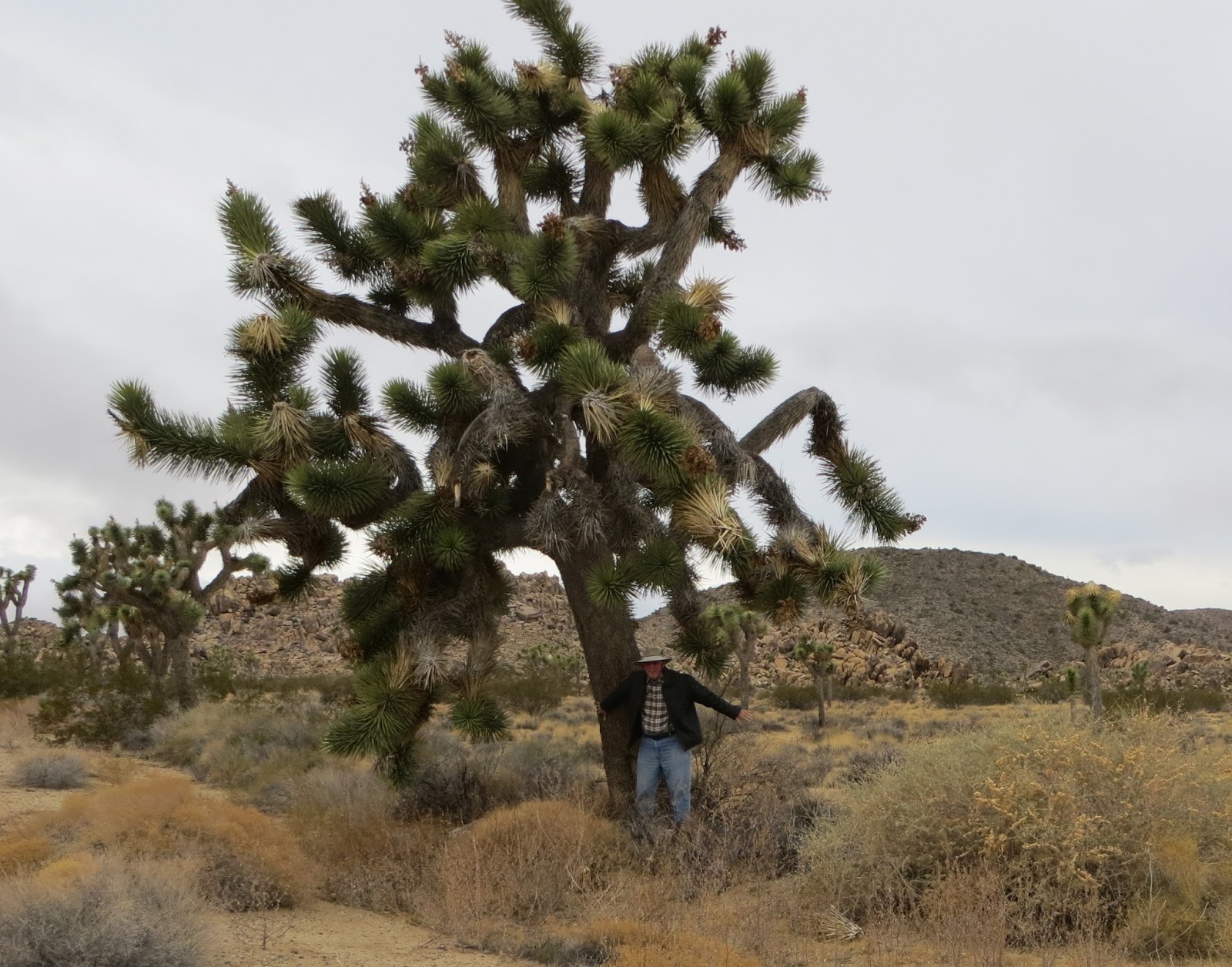
In Joshua Tree National Park, you can easily observe the intersection of the Mojave and Sonoran Deserts. The Mojave is high elevation and the Sonoran is low elevation, each with unique flora, fauna, and geology. The Joshua trees (Yucca variety) are found only in the Mojave, growing approximately 1-inch per year to a maximum height of roughly 40-feet. This is a park that is well worth the effort to visit!

Today, we shopped and did chores. The weather has warmed and I wore short and tee-shirt today. Great Christmas weather in Southern California!

12-30-15
We visited Sister Rose in LA and enjoyed a delightful time. Visiting at her hotel at the Woodland Hills Warner Center, in the San Fernando Valley, we caught-up on news and events from Mississippi and made plans to meet-up around her LA Tour schedule.
On Wednesday, Terry and I drove to Santa Monica, Venice Beach, Marina Del Rey, and then up to Pasadena.
The ocean views and landscaping along Santa Monica cliffs and the beach were splendid on a beautiful, sunny day, and the Santa Monica Pier was alive with a carnival atmosphere. We enjoyed walking the Park pathway along the ocean-front.
The Venice Beach Boardwalk was an eclectic mix of all the lifestyles (colorful characters) in LA. With no rules and sunshine all day, Venice Beach is nothing but fun!
Marina Del Rey was so impressive with the luxurious yachts and the restaurants, shops and marinas along the basin. This waterfront resort promises fun in the sun with tranquility. We walked some of the Quays, admiring the beautiful boats, and enjoying the morning sun shining through the trees.
Driving up to Pasadena on the 110, we were attracted to the Arroyo Seco Park and decided to spend some time in the park, following our visit to Pasadena.
The Rose Bowl festivities attracted very large crowds and seeing the process in-the-works was very interesting. We had dinner with Rose at a Ventura Blvd restaurant which was just right for a pleasurable dinner and visit.
On Thursday, we drove around the Beverly Hills neighborhood and cruised Rodeo Drive. Taking Sunset Blvd. over to Hollywood, we saw the Grauman’s TCL Chinese Theater with the walk-of-stars. European-influenced art mingles with classic film memorabilia and gaudy glitz. I was reminded of Woody Allen’s statement; “In Hollywood, they don’t throw out their trash, they make television programs from it”. On New Year’s Eve, it was packed with tourists from around the world.
We enjoyed some of the numerous, very nice parks around LA and met and talked to lots of friendly, engaging LA locals. It was a terrific visit in LA and we wanted to stay longer!